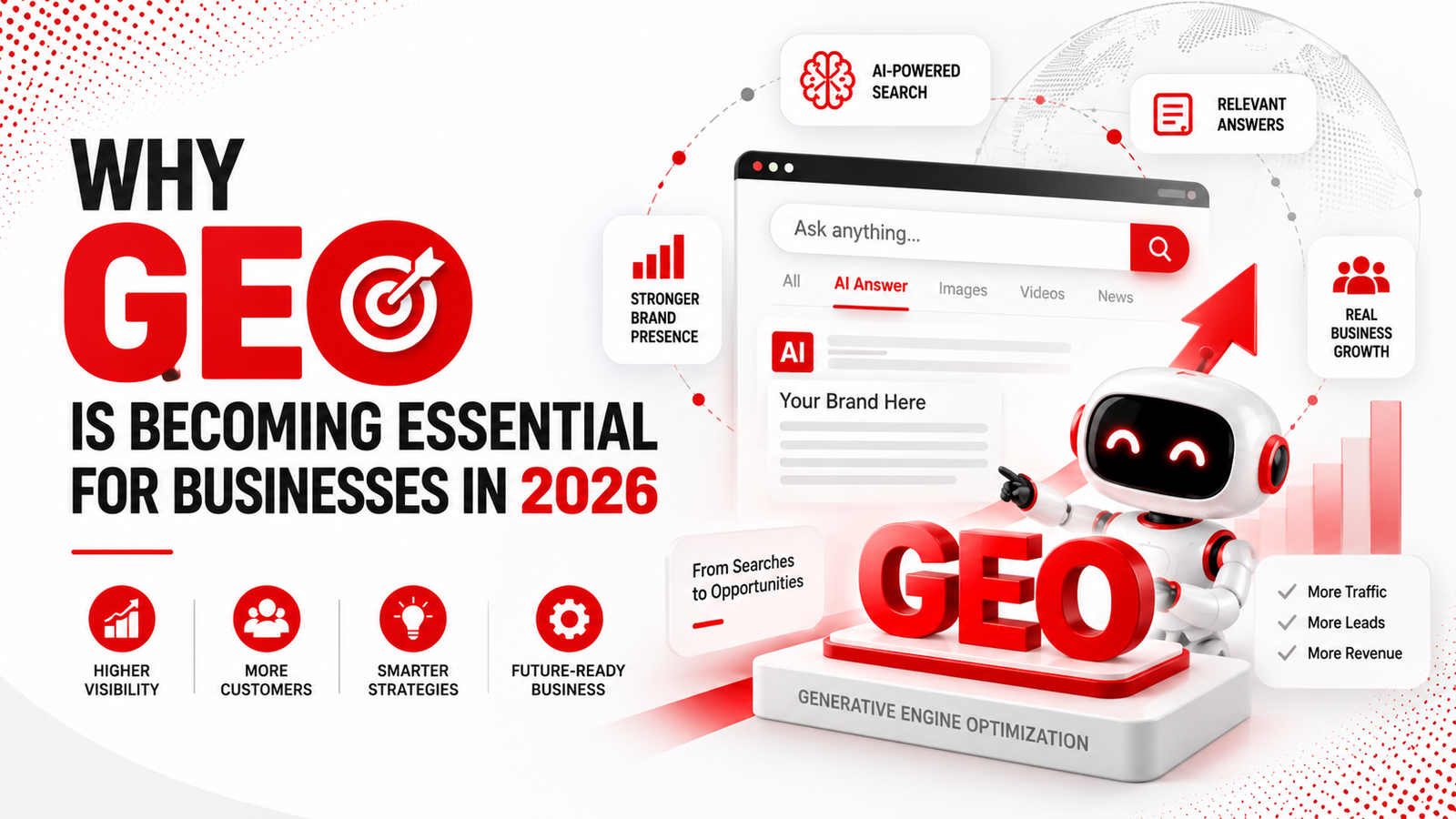
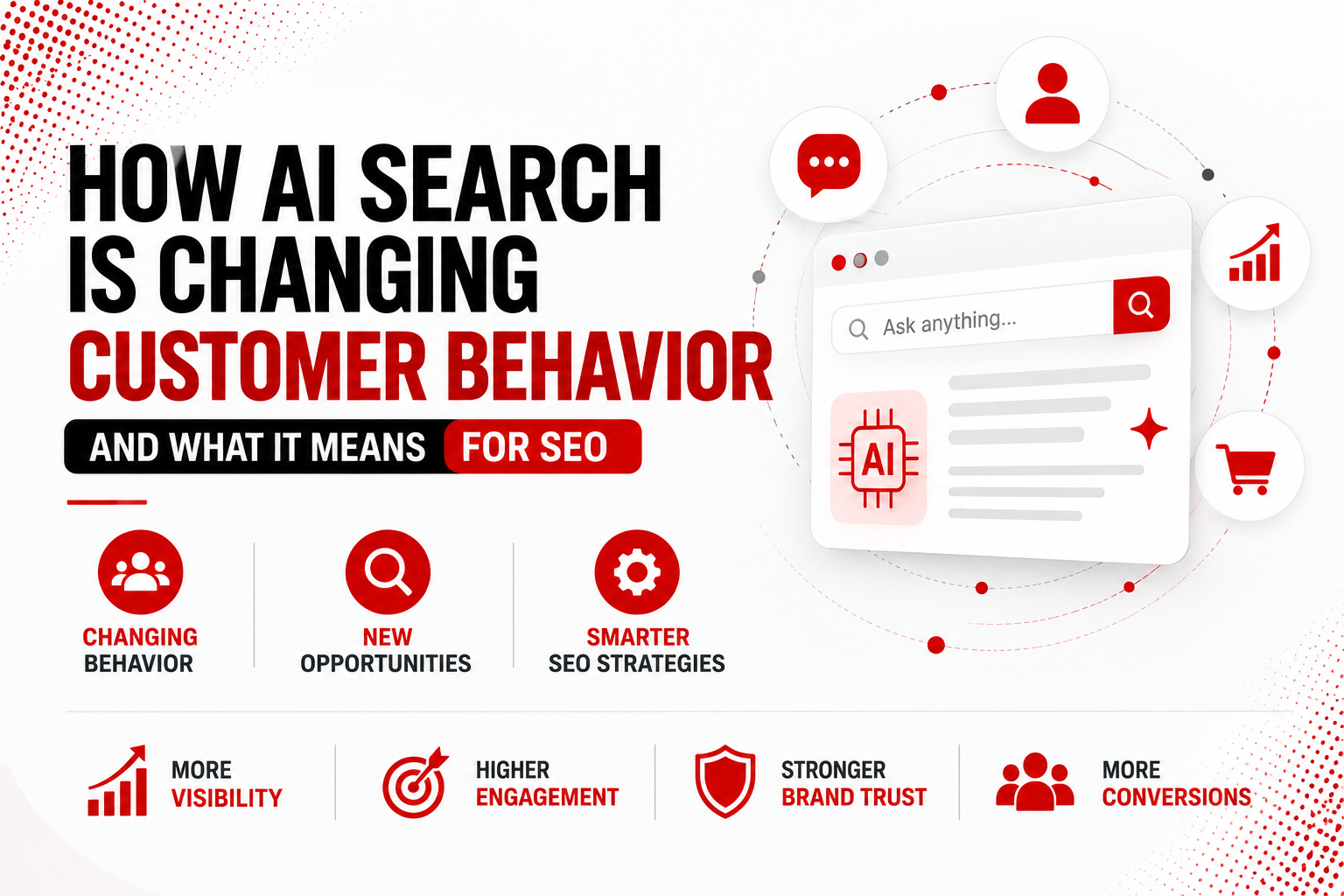
AI powered search is changing how people discover information, compare services, and choose businesses online. Instead of relying only on traditional search results, users can now receive AI-generated answers that summarize information from multiple sources. For businesses, optimizing for AI powered search creates new opportunities to improve online visibility, attract relevant visitors, and build trust with potential customers.
As AI-driven search experiences continue to evolve, businesses need a strategy that combines traditional SEO with AI powered search optimization. This means creating helpful content, strengthening technical SEO, demonstrating expertise, and making website information easy for search engines and AI systems to understand.
In this guide, you will learn how AI powered search works, why it matters for your website, and which strategies can help improve visibility across traditional search engines and AI-powered platforms.
What Is AI-Powered Search?
AI powered search uses artificial intelligence to interpret questions, understand context, retrieve relevant information, and generate answers. Unlike traditional search experiences that primarily present a list of links, AI powered search can summarize information and provide citations or links to sources that help users explore a topic further.
Examples include Google’s AI Overviews, Google AI Mode, and conversational AI platforms that retrieve information from the web.
Understanding AI powered search is important because users increasingly expect direct answers to complex questions. Websites that provide accurate, relevant, and well-structured information can improve their chances of being discovered through different search experiences. However, inclusion in AI-generated answers is never guaranteed.
Why AI-Powered Search Matters for SEO
AI powered search creates additional opportunities for businesses to reach people researching products, services, and solutions. A user may discover a brand through a cited source before visiting its website or contacting the company.
A successful AI powered search strategy can support:
- Online visibility: Increase opportunities for your content to be discovered through AI-generated answers.
- Brand awareness: Help potential customers encounter your business while researching relevant topics.
- Qualified traffic: Attract visitors looking for specific answers and solutions.
- Trust and credibility: Demonstrate expertise through accurate, helpful information.
- Long-term SEO performance: Strengthen the content quality and technical foundations that support organic discovery.
Although AI powered search introduces new visibility opportunities, traditional SEO remains important. Websites still need accessible pages, useful content, and a clear structure to perform well across search environments.
8 Ways to Optimize Your Website for AI-Powered Search
1. Strengthen Technical SEO for AI-Powered Search
Technical SEO provides the foundation for AI powered search visibility. Search systems need to discover, crawl, and understand your website before its content can be considered for relevant search experiences.
To prepare your website for AI powered search, review your robots.txt file, XML sitemap, indexation status, canonical tags, internal links, and page performance. Ensure important content is available as readable text and that essential pages return the correct HTTP status codes.
Use Google Search Console to identify crawling and indexing issues. Fix broken links, resolve redirect problems, and ensure your website works effectively on mobile devices.
These improvements do not guarantee AI citations, but they help maintain the technical accessibility required for search visibility.
2. Create Helpful Content for AI-Powered Search
High-quality content is essential for AI powered search because users need accurate answers, not repetitive information created solely to target keywords.
When creating content for AI powered search, answer the reader’s main question early, provide supporting explanations, and include examples based on genuine experience. Add relevant data, cite trustworthy sources, and explain complex concepts in clear language.
For example, an SEO agency could publish a practical case study showing how it improved a website’s indexation, organic visibility, or content performance. Original insights give readers additional value beyond generic summaries.
These practices support E-E-A-T: Experience, Expertise, Authoritativeness, and Trustworthiness. Demonstrating these qualities can strengthen content credibility, although E-E-A-T is not a single ranking factor.
3. Use AI SEO and Answer Engine Optimization
AI SEO combines established SEO principles with an understanding of how AI-driven search experiences interpret and present information. Answer engine optimization focuses on making content useful for direct answers to user questions.
Both approaches can support AI powered search by improving the clarity and relevance of your content.
Use descriptive headings, concise explanations, relevant examples, and logical content organization. Address related questions that users may ask before, during, and after researching a topic.
For instance, an article about AI search optimization could answer what it is, why it matters, how to implement it, and how to measure results. This structure helps readers understand the subject and makes the relationships between concepts clearer.
4. Apply Generative Engine Optimization (GEO)
Generative engine optimization focuses on improving how a brand’s information may be discovered or referenced in generative AI experiences.
For AI powered search, GEO strategies should emphasize accurate information, original research, relevant sources, and clear explanations. Publish content that answers real customer questions instead of producing large quantities of similar pages.
You can strengthen your GEO approach by developing topic clusters, linking related articles, maintaining consistent brand information, and earning relevant mentions from reputable publications.
GEO should complement traditional SEO rather than replace it. There is no guaranteed technique for securing citations in AI-generated responses.
5. Improve AI Visibility Across Search Platforms
Improving AI powered search visibility requires understanding where and how your brand appears in AI-generated answers.
Start by identifying important questions related to your services. Test those queries across relevant platforms and record whether your website is cited, whether your brand is mentioned, and which competitors appear.
To measure AI powered search performance, monitor AI referral traffic in Google Analytics 4, organic performance in Google Search Console, and the appearance of your content in relevant AI experiences.
Because AI answers can change between queries and over time, use a consistent measurement process instead of relying on isolated observations.
6. Use an AI Visibility Tool to Track Results
An AI visibility tool can help you monitor brand mentions, cited pages, competitor visibility, and changes across supported platforms.
When choosing an AI visibility tool for your AI powered search strategy, assess its platform coverage, reporting frequency, historical data, competitor analysis, and ability to distinguish citations from simple brand mentions.
You can begin without a paid tool by tracking a set of relevant queries in a spreadsheet, reviewing AI responses periodically, and analyzing referral traffic in GA4.
Treat all tool metrics as estimates of visibility rather than a complete record of every AI-generated answer.
7. Improve Structured Data and Content Clarity
Structured data helps search engines interpret information about your website. Depending on your content, relevant schema types may include Organization, Article, Product, or LocalBusiness.
For AI powered search, structured data should accurately describe the information already available on the page. Validate your implementation and follow the relevant search engine guidelines.
However, schema markup does not guarantee that your website will be selected as a source in AI-generated answers. Google does not require special AI schema for inclusion in its AI search features.
Also maintain clear About, Contact, and service pages, and use internal links to connect related information across your website.
8. Update Content to Maintain AI-Powered Search Visibility
Content optimization for AI powered search should be an ongoing process. Outdated statistics, broken links, and incomplete answers can make pages less useful to readers.
Review important articles regularly. Verify factual claims, update examples, add missing information, and improve internal links when relevant.
Prioritize pages based on business value, search performance, and the importance of the information they provide. Measure results after making meaningful updates rather than changing publication dates without improving the content.
GEO vs SEO: Which Approach Supports AI-Powered Search?
GEO and SEO have different emphases, but both contribute to a broader AI powered search strategy.
| Area | Traditional SEO | GEO |
|---|---|---|
| Main goal | Improve search visibility and organic traffic | Improve visibility in generative AI experiences |
| Content | Relevant, useful, optimized pages | Useful, credible content that clearly answers questions |
| Technical requirements | Crawling, indexation, internal linking | The same technical foundations remain important |
| Authority | Relevant links, reputation, and expertise | Credibility, useful evidence, and relevant references |
| Measurement | Rankings, traffic, conversions | Mentions, citations, referral traffic, and conversions |
The most practical approach is to combine both. Traditional SEO helps search engines discover and understand your content, while GEO encourages you to evaluate how your information is represented in AI-generated responses.
How to Improve AI Search Visibility: A 90-Day Plan
To make AI powered search optimization actionable, divide your work into three stages.
Days 1–30: Establish your baseline
- Audit technical SEO, indexation, and internal linking.
- Identify important pages that need better answers or original insights.
- Create a list of relevant customer questions.
- Record organic performance and initial AI visibility observations.
Days 31–60: Improve content and coverage
- Update priority service pages and existing articles.
- Publish supporting content that addresses genuine information gaps.
- Validate relevant structured data.
- Start monitoring AI citations and referral visits consistently.
Days 61–90: Measure and refine
- Compare performance with your baseline.
- Identify content that attracts relevant visitors and conversions.
- Refresh underperforming pages where meaningful improvements are possible.
- Expand successful topic clusters based on evidence.
A structured process helps integrate AI powered search into your broader digital marketing strategy instead of treating it as a separate experiment.
Conclusion
AI powered search is changing how users discover and evaluate information, but sustainable visibility still depends on a technically sound website, useful content, and credible expertise.
By combining traditional SEO, answer-focused content, GEO principles, structured data, and consistent measurement, businesses can build a stronger foundation for visibility across search engines and AI-driven experiences.
The goal of AI powered search optimization is not to manipulate an algorithm. It is to create information that genuinely deserves to be discovered, referenced, and trusted.
Ready to Improve Your AI-Powered Search Visibility?
At SEO Rank 1, we help businesses strengthen their online presence through strategic SEO, content optimization, and data-driven improvements.
Whether you want to improve organic rankings, build topical authority, or prepare your website for evolving AI search experiences, our approach starts with understanding your current performance and identifying the highest-impact opportunities.
Visit SEO Rank 1 to learn more about our SEO services and take the next step toward improving your website’s visibility.
FAQs
What is AI powered search, and how does it work?
AI powered search uses artificial intelligence to understand user queries, retrieve relevant information, and generate answers based on information from multiple sources. Platforms such as Google AI Overviews and AI Mode can summarize topics and link to relevant websites. For businesses, this creates opportunities to reach users by publishing accurate, helpful content that directly addresses their search intent.
How can I optimize my website for AI powered search?
To optimize your website for AI powered search, focus on technical SEO, helpful content, clear headings, and credible information. Make sure search engines can crawl and index your important pages, answer users’ questions directly, include original insights, and connect related pages through internal links. These practices improve your website’s overall search accessibility and content quality, although they cannot guarantee inclusion in AI-generated answers.
What is the difference between AI SEO and traditional SEO?
Traditional SEO focuses on improving website visibility in organic search results through technical optimization, relevant content, and authority building. AI SEO extends this approach by considering how content may be discovered, understood, and referenced in AI-generated responses. Both depend on accessible websites, useful information, and credibility, so combining them creates a more comprehensive search optimization strategy.
What is generative engine optimization (GEO), and how does it improve AI search visibility?
Generative engine optimization (GEO) focuses on improving the visibility of content and brands in generative AI experiences. It involves creating original, well-supported content, answering specific questions, citing trustworthy sources, and building a credible online presence. GEO complements traditional SEO, but no technique can guarantee that an AI platform will mention your brand or cite your website.
How can I measure and improve my website’s AI search visibility?
You can measure AI search visibility by tracking brand mentions, cited URLs, competitor appearances, and referral traffic from AI platforms. Use Google Search Console to monitor organic search performance and Google Analytics 4 to analyze website visits and conversions. You can also evaluate a relevant set of questions across AI platforms or use an AI visibility tool to monitor trends. Review the results regularly and improve pages that lack useful information, clear answers, or relevant supporting evidence.